
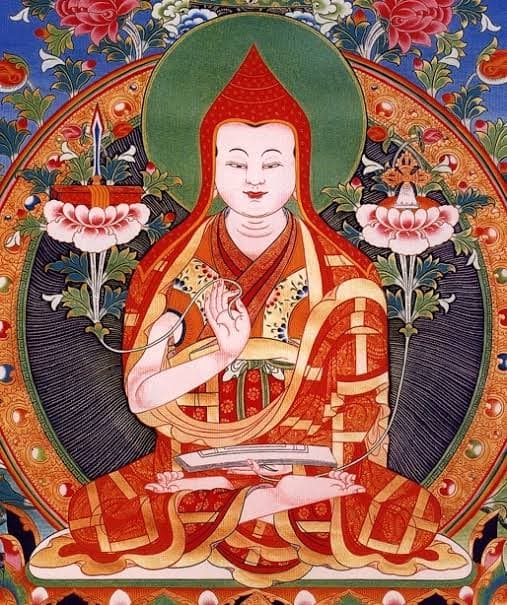
Patrul Rinpoche
PATRUL RINPOCHE · 華智
The most renowned Nyingma master of the nineteenth century. He received the Longchen Nyingtik preliminaries from Jigme Gyalwe Nyugu, composed The Words of My Perfect Teacher, and transmitted the heart-essence of Dzogchen to disciples such as Lungtok Tenpe Nyima.
Name and Emanation
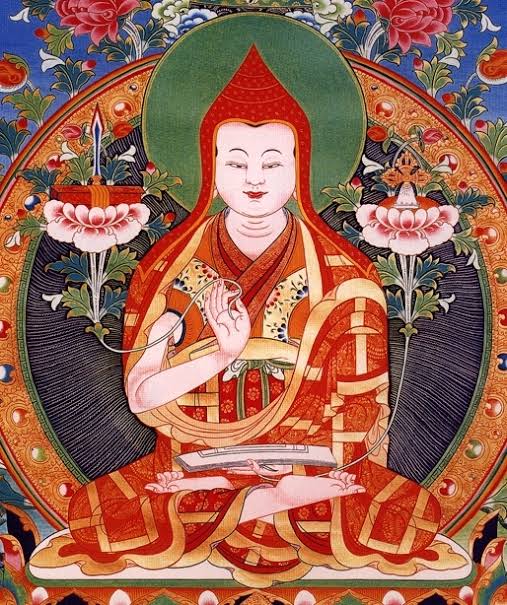
The master's full name was Orgyen Jigme Chökyi Wangpo, known to the world as Patrul Rinpoche and in the Chinese lands often called Huazhi Rinpoche. In 1808, the Tibetan Earth Dragon year, he was born into the Gyathö family in Getse Dzachuka in northern Kham, a high plateau pastoral region in what is today the area around Sershul in Sichuan. In his early childhood he was recognized by Dodrupchen Jigme Trinle Özer as the reincarnation of the previous master Palge Samten Phuntsok, and was given the name Orgyen Jigme Chökyi Wangpo. Within the lineage he was further revered as the "speech emanation" of the Omniscient Dharma King Longchenpa and of Jigme Lingpa, the tertön who revealed the Longchen Nyingtik treasures—for his life's work of spreading the pith instructions and widely transmitting the preliminaries fulfilled this very expression of enlightened speech. The master took ordination and received his vows under Khenpo Sherab Zangpo. Brilliant and precocious from childhood, able to read and write, and possessed of innate aptitude for the Three Baskets of the teachings, he was the pivotal master who carried forward and handed on the transmission of the Longchen Nyingtik preliminaries.
Lineage and Realization
Throughout his life the master studied under a vast array of teachers, but his root guru was Jigme Gyalwe Nyugu—the Lord Gyalwe Nyugu, heart-son of Jigme Lingpa. Relying upon Gyalwe Nyugu, the master heard and practiced the pith instructions of the Longchen Nyingtik preliminaries no fewer than twenty-five times; each time he received them, he would practice them diligently in accordance with the teaching from beginning to end, completing the full round before stopping. For this reason his transmission of the preliminaries was pure and unmixed, and most attuned to guiding later students. Besides his root guru, the master also relied upon Do Khyentse Yeshe Dorje, Dola Jigme Kalzang, Jigme Ngotsar, the Bodhisattva Shenpen Thayé, the Fourth Dzogchen Mingyur Namkhe Dorje, Shechen Öntrul Thutob Namgyal, Tsangpa Ngawang Chöjor, and many other great spiritual friends, receiving from them the teachings of Dzogchen and of both Sutra and Tantra, and obtaining the transmissions of the Kangyur and Tengyur. Among these, Do Khyentse Yeshe Dorje, through his crazy-wisdom conduct, pointed out the master's own awareness directly, and was the most profound circumstance for his realization; through this the master attained a realization as vast as space, and the view and meditation of Trekchö (cutting through) and Tögal (direct leap) became perfectly unobstructed and complete.
Retreat and Wandering
In his early years the master spent long periods in retreat in the area of Dzogchen Monastery, dwelling in such hermitage holy places as the Yamantaka Cave and the Long-Life Cave, practicing meditation with great diligence, and attaining a realization vast as space within the luminous emptiness of pure awareness. From around the age of thirty, the master gave up settled dwelling and took up a life of perpetual wandering as a traveling ascetic, with no fixed itinerary and no fixed abode, clad in ragged clothes and appearing like a beggar; though a great accomplished master, he went unrecognized by the world. His footsteps reached Serta, Yarlung Pemakö, Tsangtang, Minyak, and many other places, where he liberated beings as circumstances allowed. In the area of Barkam, in order to put an end to a feud and armed strife between two clans, he went so far as to lie across the crossroads of the main road, declaring himself afflicted with the "disease of awakened-awareness bodhicitta," and by this moved both sides and dissolved their murderous intent. He also widely taught The Way of the Bodhisattva (Bodhicharyavatara) in various places, putting an end to tribal feuds and killings and abolishing the evil customs of poaching and of slaughtering animals at feasts—transforming the customs of eastern Tibet through the example of his compassionate conduct, so that the world was moved by his virtuous influence. During the years he taught The Way of the Bodhisattva, the flowers in his garden marvelously bore blossoms of thirty to fifty petals, which the world came to call the "Bodhicharyavatara flowers."
Writings and Teaching
The master's writings were many; about six volumes survive—evoking the number of the six paramitas—though most were never printed. The most renowned among them is the Words of My Perfect Teacher (Kunzang Lama'i Shelung), the Guide to the Preliminaries of the Great Perfection, which he composed based on the oral teachings of his root guru Jigme Gyalwe Nyugu. This work is a complete guide to the practice of the Longchen Nyingtik preliminaries, beautiful in both wording and meaning, profound yet accessible. From the outer preliminaries—the difficulty of obtaining a human life and the impermanence of life—through to the inner preliminaries of taking refuge, generating bodhicitta, and guru yoga, all are set out in orderly stages and complete with pith instructions. For this reason it spread most widely, crossing the boundaries of sects to become the standard for preliminary practice throughout Tibetan Buddhism. In addition, the master also composed The Excellent Discourse of the Great Vehicle, a topical commentary on The Way of the Bodhisattva, a topical outline of the Treasury of Qualities (Yönten Dzö), Praise of the Seven Treasuries, the allegorical Dharma teaching The Lotus Garden's Song and Dance, and various works of praise. His humble and selfless character was constantly revealed even amid his writing and teaching: he once took the form of an ordinary traveling monk and went to Dzomang Monastery in Drango and to Kathok Monastery in Derge, to receive his own composition, the Great Perfection Preliminaries, from others without revealing himself; and he once carried an infant on his back and assisted a widow back and forth from a Dharma gathering, with no one in the world knowing that he was a great master of his age.
Pointing Out the Nature of Mind
In his teaching of Dzogchen Trekchö and Tögal, the master placed the greatest emphasis on directly pointing out pure awareness, so that disciples could enter into it on the spot. The story of how he pointed out the nature of mind to his most important disciple, Nyoshul Lungtok, has been recounted to this day. One night beneath the starry sky, master and disciple lay together in the open wilderness, practicing the gaze upon space according to the key points of Trekchö. The master asked: "Do you see the stars in the sky? Do you hear the dogs barking at Dzogchen Monastery? Do you hear what I am saying?—The Great Perfection is just this." Hearing these words, Nyoshul Lungtok suddenly broke through, realizing naked pure awareness, free of elaboration, luminous and empty; in that moment of mind meeting mind between master and disciple, he entered the authentic view of the Great Perfection. The master was also entrusted by the tertön Chokgyur Dechen Lingpa to uphold the lineage of such treasures as the Union of Chakrasamvara Father and Mother and the dharma-lineage of the Heart-Essence of the Three Classes (Tsasum Nyingtik). In the Dzogchen transmission he inherited above from his root guru Gyalwe Nyugu and opened the way below to many heart-sons, causing the pith instructions of the preliminaries and the authentic view of the heart-essence to spread widely throughout eastern Tibet—merit beyond measure.
Lineage and Disciples
From the master's gate, great masters arose generation after generation, and the lineage continued unbroken. His most important heart-son was Nyoshul Lungtok Tenpe Nyima, who followed the master for many years and received in full the Longchen Nyingtik Dzogchen transmission, foremost in view; he later transmitted it to Khenpo Ngawang Palzang, and this main lineage continues to the present day. Among his four chief disciples were Gönjong Tendzin Norbu, foremost in exposition; Gemang Gyalse, foremost in valid cognition (logic); and Mura Genrang Chödrak, foremost in conduct. In addition, the Omniscient Mipham Rinpoche; Khenpo Kunzang Pelden, who composed the extensive commentary on The Words of My Perfect Teacher; Khenpo Shenga; Adzom Drukpa; the Fifth Dzogchen Thubten Chökyi Dorje; the tertön Lerab Lingpa; and the Second and Third Dodrupchen incarnations, all received the milk of Dharma directly from the master. Together with the Bodhisattva Shenpen Thayé, the master revived the Nyingma teachings of the Net of Magical Illusion (Māyājāla) and the Guhyagarbha Tantra; his transmission of the Māyājāla was later carried on generation by generation through Khenpo Kunzang Pelden, Dilgo Khyentse Rinpoche, and others, down to the Dharma King Jigme Phuntsok, blessing the present age.
Passing into Nirvana
In 1887, the Tibetan Fire Pig year, on the eighteenth day of the fourth month, the month of Saga Dawa, while the master was abiding in retreat at Gemang Monastery and other places, he displayed his passing into nirvana. At the moment he relinquished his body, he sat upright with his hands in the gesture of meditative equipoise, in the vajra posture, and dissolved serenely into the dharmadhatu, manifesting the auspicious signs of a great accomplished master of the Great Perfection. During his life the master had received a prophecy that he would take rebirth in the eastern pure realm of Manifest Joy (Abhirati). Throughout his life he sought no high position, accumulated no possessions, wandered as a homeless ascetic, and lived plainly and humbly—yet his realization was vast, his writings filled volumes, and he nurtured countless gifted disciples. He was both the central holder of the transmission of the Longchen Nyingtik preliminary pith instructions and an exemplar of the nonsectarian Rimé spirit. His example of conduct and the Dharma teaching of The Words of My Perfect Teacher remain to this day a ford by which countless practitioners enter the Great Perfection—a radiance that never fades.